











The Flawed Coastal Zone Management Plan: Misinterpretation of “Bay” and Commercial Exploitation of Beaches

Coastal areas are among the most ecologically fragile zones on Earth. They support marine biodiversity, protect inland communities from extreme weather, and provide livelihoods for millions. In recognition of their sensitivity, governments worldwide have adopted Coastal Zone Management Plans (CZMPs) to regulate development along shorelines. However, in some cases, these plans have been distorted to serve commercial interests rather than conservation. A striking example lies in the erroneous interpretation of the term “bay” within the context of Indian coastal regulation, which has been used to dilute protections for beaches and expand their commercial use.
The Coastal Regulation Framework
India’s Coastal Regulation Zone (CRZ) Notification, first issued in 1991 and later revised in 2011 and 2019, was designed to balance ecological preservation with human activity. Under this framework, areas such as estuaries, mangroves, coral reefs, and bays are given special consideration due to their ecological significance. Beaches adjacent to bays, in particular, are generally subject to strict restrictions on construction and commercial activity.

Twisting the Definition of “Bay”
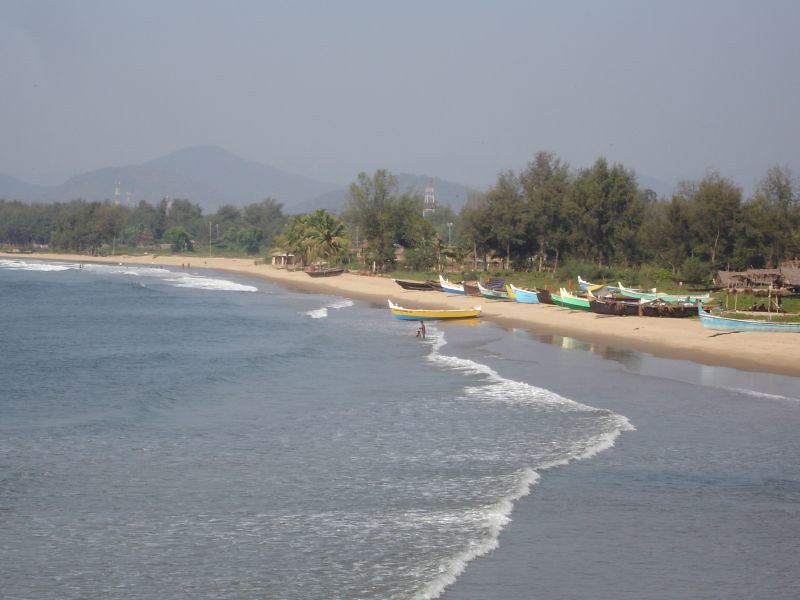
The controversy stems from the manipulation of the word “bay” in official interpretations of the CZMP. By selectively narrowing or expanding the definition, certain authorities and developers have sought to exclude stretches of coast from stringent protection. For instance, instead of recognizing natural indentations in the shoreline as bays—an interpretation consistent with global geographic standards—planners have sometimes dismissed them as “open coasts.” This reclassification weakens restrictions on development, paving the way for large-scale resorts, hotels, and commercial establishments along fragile beaches.
Such interpretative loopholes have been exploited most visibly in tourism-heavy states like Goa, where beaches are both ecologically sensitive and economically valuable. Declaring a beach to be outside a “bay” zone often translates into permissions for new constructions, beach shacks, and commercial complexes that would otherwise be prohibited.
Consequences of Mismanagement
The misinterpretation of coastal geography is not merely a semantic issue; it has direct ecological and social consequences. Over-commercialization of beaches leads to:
- Erosion and habitat destruction: Concrete structures and altered sand flows accelerate shoreline erosion.
- Loss of biodiversity: Nesting grounds for turtles and breeding zones for fish are disrupted.
- Pollution and waste: Tourism-related activities increase plastic waste and sewage discharge into marine waters.
- Community displacement: Local fishing communities lose traditional access to coastal resources when beaches are privatized for commercial use.
By ignoring scientific definitions and ecological imperatives, authorities undermine the very intent of the CZMP—to safeguard coasts for both nature and people.
A Call for Transparency and Accountability
To address these systemic flaws, several reforms are urgently needed:
- Adopt uniform scientific definitions: Terms like “bay” must be defined based on established geomorphological criteria, leaving no scope for arbitrary interpretation.
- Strengthen independent oversight: Coastal planning bodies must include marine scientists, geographers, and community representatives—not just bureaucrats and developers.
- Prioritize local livelihoods: Management plans should put fishing communities and traditional coastal users at the center, resisting the trend of turning beaches into profit zones.
- Ensure public scrutiny: Draft CZMPs must be subject to transparent public consultations, with local objections seriously considered.
The Coastal Zone Management Plan was envisioned as a tool to balance development with ecological protection. Instead, misinterpretations—particularly of the word “bay”—have been used to erode safeguards and open fragile coasts to unchecked commercial exploitation. Unless corrected, these practices will cause irreversible damage to India’s coastal ecosystems and the communities that depend on them. Protecting coasts requires not just laws on paper, but integrity, transparency, and scientific clarity in their implementation.