









KAOA a Vehicle for Money laundering?

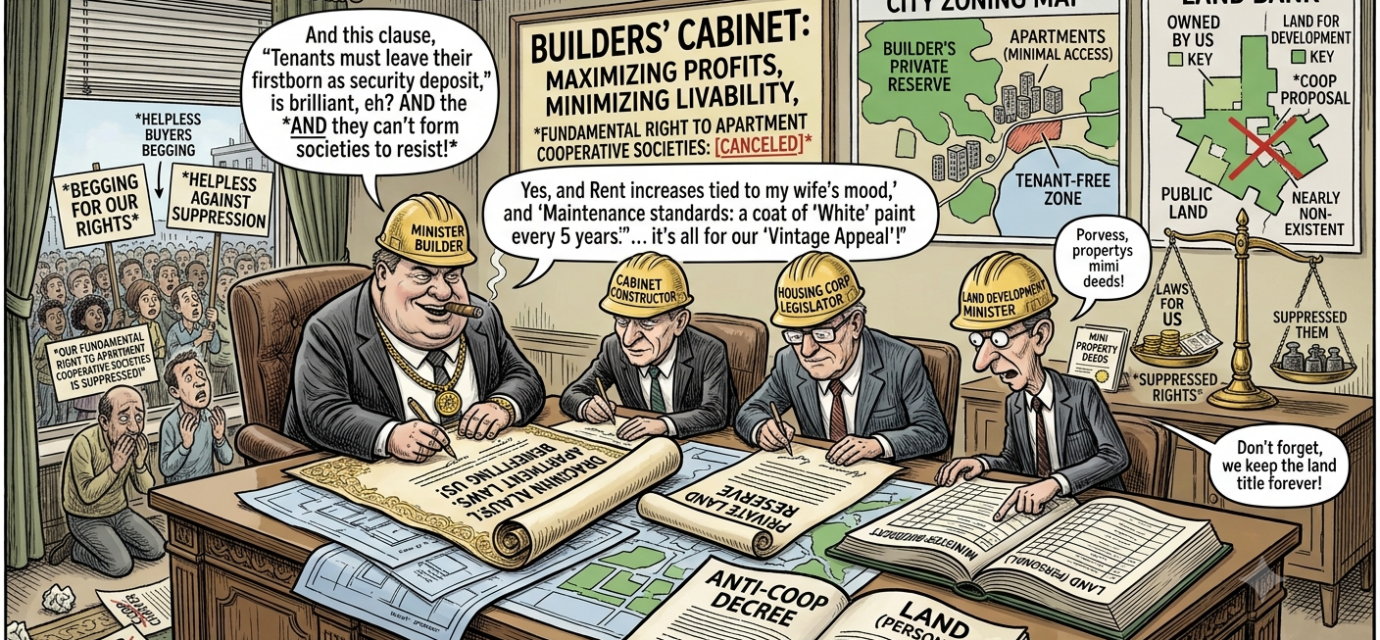
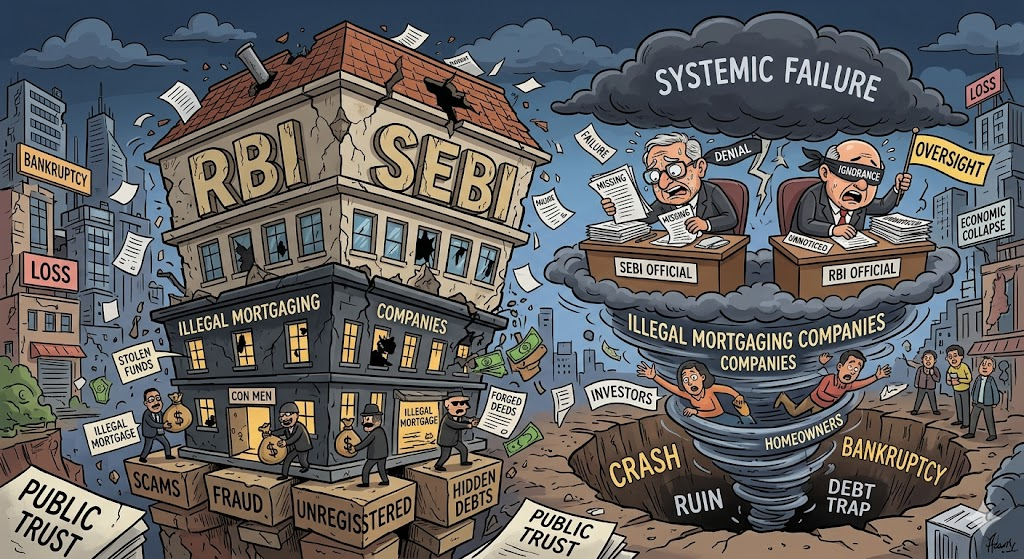
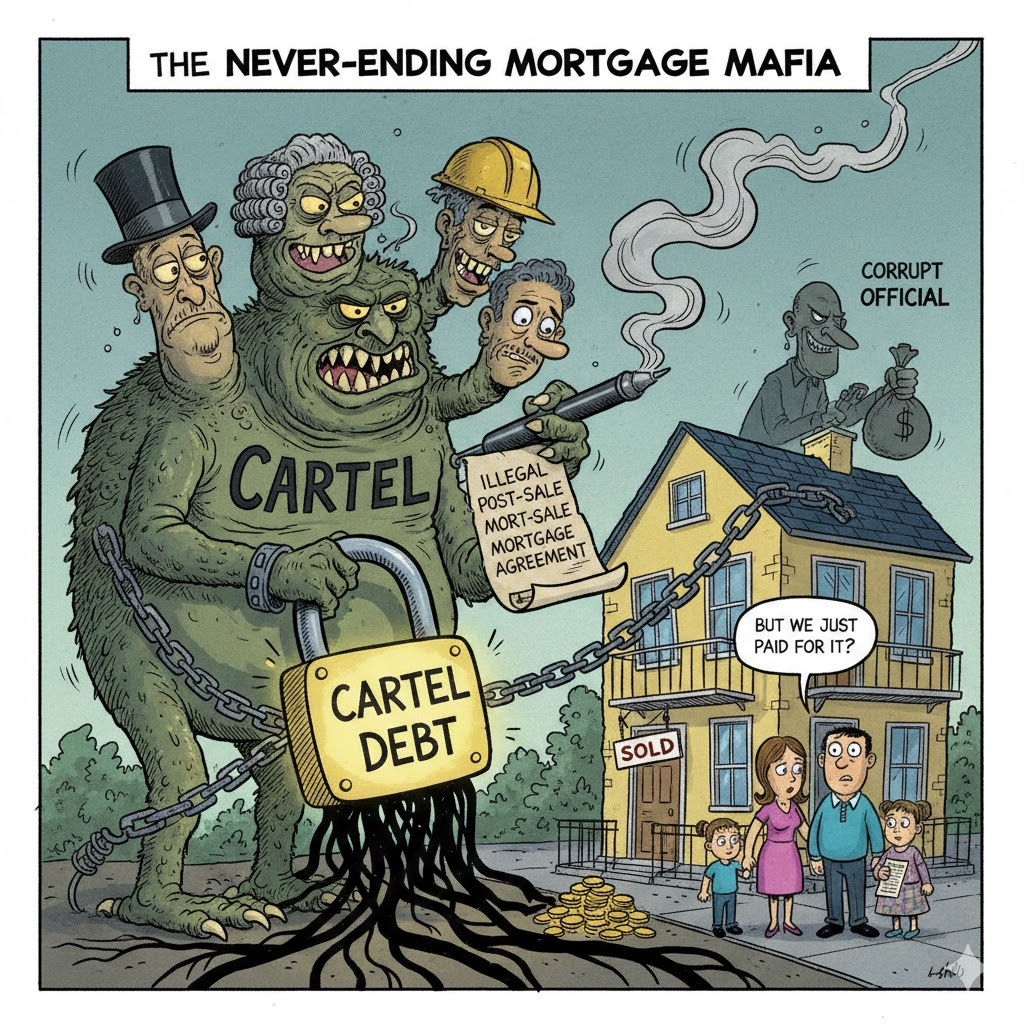
In many apartment projects in Karnataka, after apartments are sold and handed over, a builder may still retain certain ownership rights—oftentimes of the land or common areas—and sometimes mortgage or encumber the property long after all flats are sold to generate funds for the next project. Builders have given written statements to RERA that it is a normal practice to do so in Bengaluru. An added complication is when the Apartment Owners’ Association under the Karnataka Apartment Ownership Act, 1972 (KAOA) is unregistered, non‑juristic, not a “consumer association”, and thus lacks capacity to sue or be sued. In that scenario, when illegal mortgaging is noticed, the flat‐owners or their association may find limited recourse, while the builder (or lender) may use the lingering legal ambiguity to defeat accountability. The Association may not have undergone RBI KYC / verification as a legal entity (for receiving funds, maintaining accounts, etc.), especially under Master Directions on KYC / AML / PMLA norms. In that context, suppose the builder, long after they have sold all apartments and after handing them over, creates a mortgage / security interest (recorded in CERSAI) over the land, title deeds, or property, which effectively encumbers the property already sold to the flat owners. The flat owners or their Association only discover this later via encumbrance certificate or CERSAI records. Because the Association cannot sue (lacks juristic status), and because buyers may find it difficult to coordinate individually, the illegal mortgage may go unchallenged or the remedy may be delayed, enabling the builder (and lender) to exploit the situation. Meanwhile, such acts may constitute serious criminal offences or predicate acts for money laundering. Under the Securitisation and Reconstruction of Financial Assets and Enforcement of Security Interest Act, 2002 (SARFAESI) and its amendments, there is requirement for registration of security interest (mortgages, hypothecation, etc.) with CERSAI (Central Registry of Securitisation and Asset Reconstruction and Security Interest). There are many real estate agencies of Bengaluru whose names are listed on CERSAI. All apartment Owners or their associations/Societies may check the details and take necessary action as per the specific legal advice. (This article is for education and information only)
- CERSAI / SARFAESI Act, 2002
- CERSAI – Central Registry of Securitisation, Asset Reconstruction, and Security Interest – is the registry for registering security interests, mortgages, etc. Under amendments (for example via Section 26D SARFAESI), a secured creditor must register its security interest with CERSAI to enforce securities under Chapter III.
- Priority of secured creditors, enforceability etc., depend on registration. Unregistered security interest loses certain enforcement rights.
- Indian Penal Code, 1860 (IPC)
- Cheating (Sections 415, 420), Criminal Breach of Trust (Sections 405, 406), Forgery (Section 463 et seq.), Criminal Conspiracy (Section 120B), etc.
- Prevention of Money Laundering Act, 2002 (PMLA)
- If fraud, cheating etc. under IPC is a predicate offence, then proceeds arising from such crime are “proceeds of crime” under PMLA. The ED can initiate attachment, investigation, prosecution.
- Consumer Protection Act, 1986 / 2019
- Defines “consumer” and “consumer association” (recognized or voluntary) under Section 12 in 1986 Act. Only recognized or voluntary consumer associations can file complaints. Statutory bodies (mandatory associations under other laws) may not qualify.
Supreme Court / High Court Precedents
- Sobha Hibiscus Condominium vs. Managing Director, M/s Sobha Developers Ltd. (2020)
- Sobha Hibiscus was a condominium / association under the KAOA. They filed a complaint under the Consumer Protection Act against the developer. Supreme Court held that an association that has come into existence pursuant to a declaration under KAOA (i.e. required by law) is not a “voluntary registered consumer association” and hence does not qualify as a “recognized consumer association” under Section 12 of the Consumer Protection Act, 1986. Therefore, it has no locus standi under that Act.
- The effect: such associations cannot file complaints under consumer protection forums even if all flats sold and handed over, if the association is not voluntarily formed/registered under applicable law.
- Karnataka High Court: “Land On Which Apartment Stands Becomes Common Property” – Keerthi Harmony vs. M/s Keerthi Estates Pvt. Ltd. (2025)
- Held that once sold, conveying undivided interest, the entire land becomes common property under KAOA. The apartment owners collectively own the land.
- CERSAI registration & priority
- Bombay High Court held that a lender whose mortgage/security interest is properly registered with CERSAI has priority over other claims (for example, government dues) in enforcement under SARFAESI. Conversely, lacking registration weakens enforcement capacity.
How Unregistered / Non‑Jurist KAOA Associations Facilitate Illegal Mortgaging
Putting the above together, here is how unregistered/non‑juristic KAOA Association status can enable illegal/misleading mortgaging by builders:
| Situation / Mechanism | How it Helps Illegal Mortgaging |
| Builder retains ownership (or title deeds) of land or the common areas even after sale of flats, or delays registration / transfer of common portions. | Builder continues to have legal capacity to mortgage the land / mortgaging via title deeds, since flat owners lack full title to land or common areas (or the declaration is not fully executed). This permits builder to use property as collateral even after flats sold. |
| KAOA Association is unregistered, not a recognized legal entity or juristic person. | Association lacks legal capacity to own, sue / take action to challenge encumbrances, demand removal of mortgages, or enforce rights under KAOA or other statutes. This legal disability reduces deterrence. |
| Deeds / Declarations under KAOA, or “Deed of Apartment”, may be delayed, incomplete, or not signed by all owners, or not registered. | The exact rights of apartment owners (especially with respect to the common areas or land) remain unclear; mortgage may be misleadingly claimed to be “free of encumbrance” even while builder has mortgaged. Homebuyers may be unaware of the mortgage when they buy. |
| Builder misrepresents or conceals the mortgage / encumbrance in documents (deed of declaration, sale deed etc.). | This gives rise to misrepresentation or false assurance to flat buyers that the land / property is free of liens / encumbrances, when in fact builder already has mortgaged it (or reserves rights). |
Criminal Wrongdoing: Cheating, Conspiracy, Fraud, PMLA
Given the above mechanisms, the following criminal offences might be made out, assuming sufficient evidence:
- Cheating (IPC Sections 415 / 420)
- If the builder makes false representation (title free, no encumbrance) or conceals the fact of mortgage/encumbrance while inducing flat buyers to pay, that may amount to cheating. The key is dishonest intention at inception.
- Criminal Breach of Trust (IPC Section 405 / 406)
- If the builder was entrusted (for example by virtue of terms in deed or declaration) with the duty to hold or convey clean title and misuses that trust by mortgaging without informing the owners or without authority.
- Forgery, Fraud (Sections 463‑465, etc.)
- If documents are forged, or false certifying (say, deed states “encumbrance free”), or misrepresentations in registered documents etc.
- Criminal Conspiracy (IPC Section 120B etc.)
- If the builder, lender, and other actors conspire to carry out the mortgaging of sold property, conceal it, mislead buyers etc.
- Money Laundering (PMLA)
- If proceeds from the funds obtained from mortgaging are then used / layered / invested etc., then such proceeds may be proceeds of crime. ED could investigate under PMLA, attach properties, etc.
- If, in structuring the mortgage / loan security, the builder or lender treats the KAOA association (non‑juristic) as a party, without confirming that it is a valid legal entity, without complying with its KYC / legal status per RBI / PMLA norms, this may suggest lack of due diligence, and may even be evidence of complicity or wilful blindness — i.e. the lender or developer knowingly dealt with an informal, non-compliant entity to facilitate the mortgage. This raises questions of collusion or fraudulent design.
- The fact that the association’s RBI KYC is not compliance for not being registered juristic entity means that the association is not recognized legally in banking / credit transactions, so any document treating it as a “borrower / guarantor / mortgagor” is legally suspect or voidable.
- Thus, the weak / non‐compliant status of the KAOA association creates a structural gap that the builder or lender can exploit to facilitate an illegal mortgage.
- Banks opening such accounts of Association without proper Registration certificate hide the account statement from the other member of the association,
Legal Gaps & Challenges
- Proving dishonest intention and misrepresentation: Courts often require that cheating or fraud be shown to have been “from the very beginning” — not mere breach later. If builder argues that mortgage took place later due to necessity or financial constraints, etc., proving initial dishonesty may be hard.
- Capacity to sue: Unregistered or non‑juristic associations under KAOA may not have capacity to sue (or rights) unless they acquire legal or juristic status (registered society or cooperative). Sobha Hibiscus case makes clear that such an association does not qualify as a “recognized consumer association”.
- CERSAI: Registration of security interest is mandatory for enforcement under SARFAESI; but mere mortgage unregistered may still exist in records (encumbrance certificate etc.), and civil courts could be used to challenge.
- Limitation period / delay: many flat buyers may discover the issue long after. Statutes of limitation or proof decay could hamper legal remedies.
- Multiplicity of Acts / Confusion: KAOA, KOFA, Cooperative Societies Act, RERA rules – different overlapping laws, might confuse which entity is relevant.
Case Study / Example: Sobha Ltd (Bengaluru) case
One specific court case in Bengaluru: Sobha Ltd. was taken to court for mortgaging the land of a project (“Sobha City”) after selling apartments to homebuyers, allegedly without the knowledge of homebuyers. (As per Money Control).
How CERSAI Law Intersects
- Under Section 26D of SARFAESI (post amendments), no secured creditor is entitled to enforce the securities unless the security interest is registered with CERSAI.
- Registration with CERSAI gives public notice and helps protect purchasers / flat owners / potential acquirers from undisclosed mortgages.
If a builder mortgages after selling apartments, but registers that mortgage, consumers might find out from CERSAI records (if they check). But if not registered, enforcement becomes problematic. However, unregistered mortgage can still be discovered via Encumbrance Certificates, but enforcement or priority may be lost.
Remedies & Legal Strategy
For flat‑owners / associations facing this scenario, the following legal strategies may help:
- Formation of a legally registered association (juristic person)
- If the current KAOA Association is unregistered / non‑juristic, owners may form a registered Cooperative society or Company under relevant law. This gives capacity to be a legal entity and capacity to sue and contract.
- Civil suit for declaration / injunction
- Seek judicial declaration that the mortgage / security interest is void or invalid, especially if made without proper ownership or misrepresentation.
- Injunction to prevent enforcement of the mortgage.
- Criminal complaint / FIR
- Against builder and other persons for cheating (Sections 415 / 420), criminal breach of trust, conspiracy, forgery etc.
- Complaint under PMLA (ED / Enforcement Directorate)
- If funds from sale + mortgages form proceeds of crime, ED may attach properties, initiate money laundering action.
- Regulatory complaint under RERA
- Under Real Estate (Regulation and Development) Act, 2016, developers are bound to duties regarding handing over common areas etc., transparency, disclosures. RERA authority may help.
- Using surveys, Encumbrance Certificates, CERSAI records to gather evidence of mortgage / security interest.
- Use High Court / Supreme Court for writs / PILs especially where many flat owners are affected.
Criminal Liability & Money Laundering: Legal Basis
Putting it all together, when a builder mortgages sold property without informing buyers or despite representations of “encumbrance‑free” title:
- Cheating (IPC Section 415 / 420): False representation or concealment, inducing buyers to enter into agreement believing property is free of encumbrance.
- Criminal breach of trust: If builder had duty or implicit trust to ensure clear title and misused that.
- Forgery / False Documents: Deed stating “free from encumbrance” when there is mortgage may constitute false documents, etc.
- Conspiracy: If builder and lender coordinate keeping the mortgage hidden, or executing legal documents knowing falsehood, etc.
- Money Laundering: Under PMLA, if funds collected from buyers or borrowed funds via mortgage are proceeds arising from “scheduled offences” (cheating, fraud), then misuse / layering / investment etc. can be subject to attachment, investigation. Cases like the Sobha case show realistic possibility.
Conclusion & Recommendations
When an association is unregistered or non‑juristic or its legal identity / KYC is not compliant with RBI Master Directions (and/or PMLA norms), this creates risk. Builders may exploit these gaps to mortgage land / title deeds after selling apartments, hide encumbrances, etc. To guard against that, flat‑owners & associations should follow a set of best practices and legal safeguards:
Key Preventive Actions
- Ensure Association is Registered / Juristic
- Formally register the association as a legal entity — e.g. as a society, cooperative, or trust, so it has legal personality (can hold property, sue/be sued).
- Verify Association’s KYC / Legal Entity Status
- Ensure the association complies with RBI / Master Direction KYC requirements for legal persons with the registration certificate.
- Make sure the KYC data of the association is uploaded to the Central KYC Records Registry (CKYCR) if required under the amendments to the Master Direction (which now mandates legal entities to upload KYC data).
- Due Diligence on Mortgages / Encumbrances
- Before purchase, and periodically after handover, homeowners / association should obtain Encumbrance Certificates (ECs) from the sub‑registrar’s office to check existing mortgages or charges on the land / property.
- Check the CERSAI registry for any registered security interests / mortgages on the property.
- Include Protective Clauses in Sale / Deed Documents
- In the Deed of Sale / Deed of Apartment / Declaration, insist on clauses that represent the property / land / common areas being “free from all mortgages / encumbrances” or ensure that mortgage rights are disclosed.
- Include warranty or indemnity clauses obliging the builder to bear responsibility if any undisclosed mortgage is found later.
- Transparent Association Governance & Record‑Keeping
- Maintain a transparent register of all title deeds, common area deeds, land records, mortgage / loan documents that the builder may have, plus any new encumbrances discovered.
- Regular audits of the association’s assets / records, meeting minutes, decisions involving common property.
- Engage Legal Advice Early
- Before finalising sale deeds, consult real‑estate lawyers to review all documents, check title, verify builder’s representations, and spot any hidden mortgages.
- If possible, obtain a legal opinion that title is clean / free of charges.
- Coordinated Action by Owners
- Owners should form a strong, legally recognized cohort (or society) to equip themselves to act collectively (legal suits, notices).
- Regular meetings to share information, ECs, CERSAI searches, updates on KYC status.
- Bank / Lender Disclosure Insistence
- If builder obtains loan or mortgages from banks, insist that lender verify legal entity status of any association / entity involved. Banks must apply KYC / AML norms; they should demand valid documents, PAN, beneficial ownership etc.
- Where possible, require transparency from banks / builder regarding any mortgage / security interest they are creating, especially post‑sale.
By Vidyadhar Durgekar, an Advocate, an Author and a poet with twelve published books in English and Kannada in addition to many articles in national and international magazines after his service in uniform in Indian Coast Guard.