









Supreme Court’s Path breaking Landmark Decision on Section 17A of the Prevention of Corruption Act

No Country can progress on a foundation of corruption. Whatever growth seen internally with corruption at its zenith, erodes away when compared internationally. The Prevention of Corruption Act was more of a symbolic legislation without any teeth in it to grind the corrupt because of which the corruption went on without any fear of prosecution. As a relief after long time, we have heard some good news regarding anti-corruption law. On 13 January 2026, the Supreme Court of India delivered a significant and path-breaking judicial pronouncement in the case Centre for Public Interest Litigation v. Union of India (2026 INSC 55), challenging the constitutional validity of Section 17A of the Prevention of Corruption Act, 1988. The provision, introduced by the 2018 Amendment, required prior approval of the competent authority before any inquiry or investigation could be initiated against a public servant for decisions or recommendations made in official capacity. In a split verdict, a two-judge bench comprising Justice B.V. Nagarathna and Justice K.V. Viswanathan expressed divergent views. While Justice Viswanathan upheld the provision with modifications, Justice B.V. Nagarathna held Section 17A to be unconstitutional and struck it down, delivering a strongly worded and jurisprudentially consequential judgment that has set the stage for a larger Bench reference.
Background: Section 17A and Its Controversy
Section 17A was inserted into the Prevention of Corruption Act through the Prevention of Corruption (Amendment) Act, 2018. It bars any police officer from initiating an enquiry, inquiry or investigation into alleged corruption offences related to decisions or recommendations by a public servant unless prior approval of the “competent authority” is obtained. The stated aim was to protect honest public servants from frivolous or vexatious probes. No honest person/officer needs to fear of any fake cases which can not stand ground.
However, critics contended that this provision effectively shields corrupt officials by barring even a preliminary investigation, undermining the very purpose of the anti-graft legislation. The controversy deepened as legal challenges argued that Section 17A resurrected doctrines earlier struck down in cases like Vineet Narain v. Union of India and Subramanian Swamy v. Director, CBI.
The Case: Centre for Public Interest Litigation v. Union of India (2026 INSC 55)
The petition, filed as W.P. (C) No. 1373/2018, was heard by a Bench of Justices Nagarathna and Viswanathan. With sharply contrasting views, the Supreme Court’s order resulted in a split verdict on the constitutional validity of Section 17A. Due to the divergence, the matter has now been referred to the Chief Justice of India to constitute a larger Bench to decide the issue afresh.
The Judgment: Striking Down Section 17A
In the separate and majority dissent, one of the Justice held Section 17A unconstitutional, articulating a detailed constitutional critique grounded in the object and purpose of the PC Act, equality under the law, arbitrariness, and past Supreme Court precedents. Her reasoning can be summarised through the following key points:
Violates Article 14 – Arbitrariness and Unconstitutional Classification
Judgement found that Section 17A creates an impermissible classification under Article 14 of the Constitution by offering protection only to certain public servants — those involved in decision-making or recommendations — while not requiring similar protection for other officials. This selective shield lacked a rational nexus with the objectives of the Act and resulted in unequal treatment before the law. Justice held that arbitrariness arises because the provision forecloses any inquiry without prior approval, effectively placing a hurdle before allegations of corruption can even be examined. According to her, such a regime protects the corrupt rather than honest officers because many misconduct complaints would never be investigated.
Revives Earlier Invalidated Regimes
It was observed that Section 17A amounted to a “resurrection” of earlier sanction regimes, notably the Single Directive and Section 6A of the Delhi Special Police Establishment (DSPE) Act — provisions which were struck down in earlier Supreme Court decisions (including Vineet Narain and Subramanian Swamy). She stressed that Parliament cannot cloak provisions, which have been invalidated, in new statutes and thereby avoid constitutional limitations.
Forecloses Even Preliminary Inquiry
A central thrust of her reasoning was that Section 17A bars even a bare inquiry or investigation at the threshold unless prior approval is obtained, undermining the very object of the PC Act to root out corruption. This threshold barrier, she held, contradicts established principles that legitimate criminal enquiries must not be obstructed by dilatory executive approval processes.
Judicial Restraint on Statutory Rewrite
Justice Nagarathna reaffirmed that courts cannot salvage an unconstitutional provision by judicially rewriting it for instance, by substituting the term “government” with an independent body such as the Lokpal or Lokayukta. She held that such judicial legislation is impermissible and does not cure the provision’s constitutional infirmity.
This has been the Indian situation, under which the corruption has groun exponentially without any control. The founding fathers of the Indian Constitution didn’t experience and didn’t imagine that it will grow to be such a monstrous affecting every citizen of India directly or indirectly. If this is the case in India, where the growing corruption curtails the growth of the economy of the developing nation, India needs to look at the other developed democracies where the corruption has been tamed to the level that it doesn’t affect the economy and the common man.
Denmark — Direct Criminalisation, No Special Procedural Shield
- Anti-corruption law in Denmark criminalises both active and passive bribery of public officials directly under the Danish Criminal Code. Both giving a bribe and accepting it by a public official are punishable offences.
- Investigations for corruption (bribery) are pursued by ordinary law enforcement and prosecutors once there is evidence, without statutory prior approval requirements unique to public servants.
- Denmark’s anti-bribery framework is also tied to international obligations under conventions such as the OECD Anti-Bribery Convention, which requires Party states to criminalise bribery of foreign public officials and investigate such acts.
Status: Denmark does not build procedural shields like prior approval for corruption investigations. Once there’s credible evidence, prosecutors may open an investigation like other crimes.
Germany — Criminal Code Model, Prosecutorial Investigation Without Special Approval
- Germany’s Criminal Code criminalises active and passive bribery involving public officials. Bribery involving both domestic and foreign officials is illegal.
- Investigations into bribery and corruption are conducted by prosecutors and police under normal criminal process. German law does not require a prior statutory approval from higher authority specifically before investigating a public servant accused of corruption.
- German prosecutors generally operate under a compulsory prosecution standard (in some cases public prosecutors must prosecute if evidence is sufficient), rather than having a mandatory procedural shield for public officials.
Status: Germany treats corruption as a straight criminal matter and does not have a built-in prior approval requirement for investigating public officials.
United States — Strong Anti-Corruption Laws, Prosecutorial Initiation Without Prior Approval
- The U.S. criminalises bribery of public officials under federal criminal statutes, particularly, making it an offence to offer or accept anything of value to influence official acts.
- Investigations are initiated by the Department of Justice (DOJ), FBI, or other law enforcement based on evidence and probable cause. There is no statutory provision requiring prior approval from executive authorities before investigating a public official for corruption.
- Separate from domestic bribery law is the Foreign Corrupt Practices Act (FCPA), which prohibits bribery of foreign officials by U.S. companies or individuals — also enforceable without a separate approval regime before investigation.
- Note: Enforcement priorities and resources can shift with policy changes (e.g., recent executive directives adjusting FCPA enforcement focus), but the legal framework itself does not build in procedural investigation barriers for officials.
Status: The U.S. does not impose procedural shields like Sec 17A before investigating public officials. Prosecutors initiate corruption probes under ordinary criminal process.
United Kingdom — Bribery Act 2010 with Broad Criminal Regime
- The Bribery Act 2010 is one of the world’s most comprehensive anti-corruption laws, criminalising bribery in both public and private contexts, including bribery of foreign officials.
- Investigations and prosecutions are undertaken by law enforcement (e.g., the Serious Fraud Office) and the Crown Prosecution Service under standard prosecution criteria.
- There is no statutory prior approval requirement solely for investigating public servants before corruption probes begin — the usual criminal justice rules and prosecutorial discretion apply.
Status: No procedural barrier like Sec 17A exists — bribery cases involving public officials proceed under normal criminal justice rules.
Comparative Summary
| Jurisdiction | Core Anti-Corruption Law | Is Prior Approval Required Before Investigation? | Notes |
| Denmark | Danish Criminal Code | ❌ No | Direct criminalisation of bribery; ordinary criminal process. |
| Germany | German Criminal Code | ❌ No | Standard prosecutorial investigation; no special shield for officials. |
| United States | 18 U.S.C. § 201 & FCPA | ❌ No | Prosecutors start investigations; no requirement for prior governmental approval. |
| United Kingdom | Bribery Act 2010 | ❌ No | Prosecuted by SFO/CPS under general criminal procedures. |
Key Insight
The procedural issue at the heart of India’s Sec 17A debate — requiring prior approval for corruption investigations is not common in other major democracies like Denmark, Germany, the U.S., Japan, or the UK. In these countries:
- Corruption and bribery are criminalised in general criminal codes or specialised statutes.
- Law enforcement and prosecutors initiate investigations based on evidence, not on prior approvals specifically for public officials.
- There are checks and balances (e.g., prosecutorial discretion, evidentiary standards, judicial oversight), but no automatic investigatory shield in the form of a statutory procedural barrier like Sec 17A.
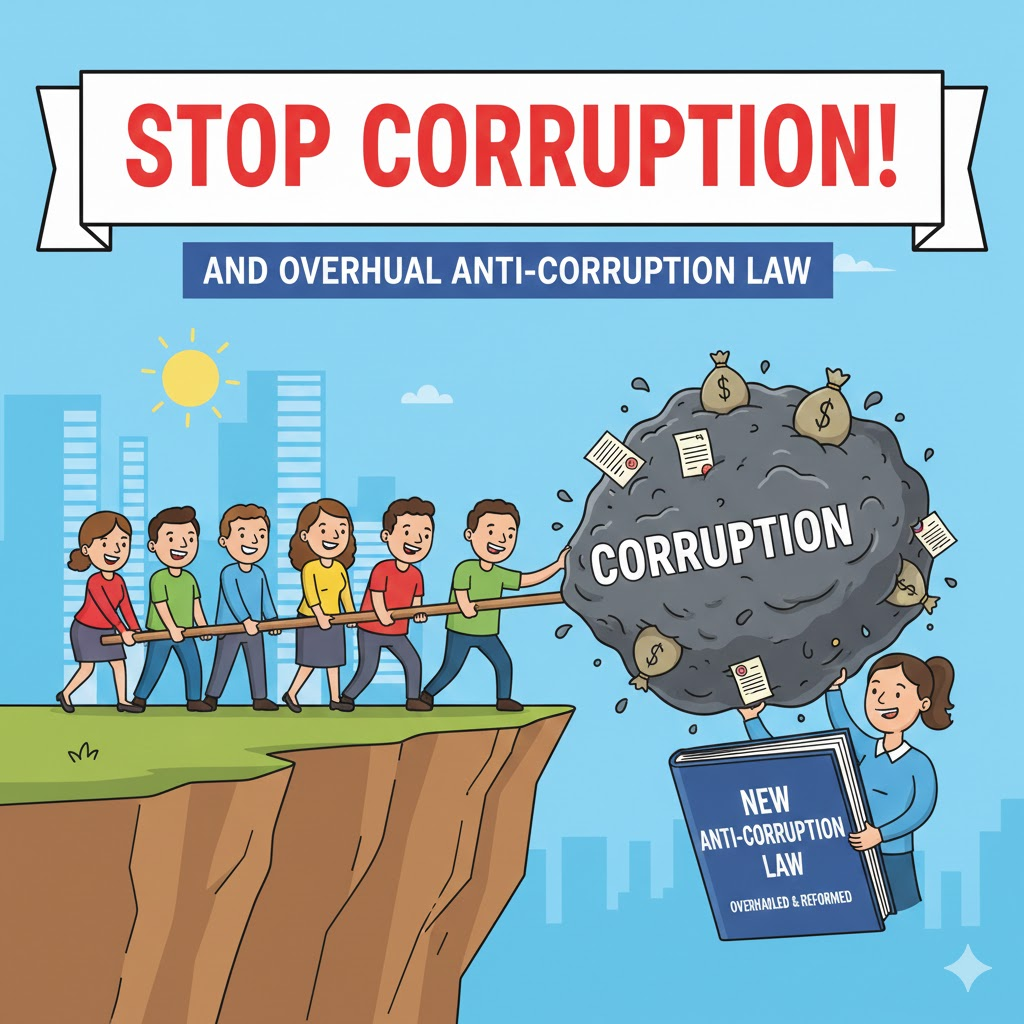
Thus, while all these countries criminalise corruption and have mechanisms to prosecute public official misconduct, their approach differs substantially from India’s contested Sec 17A regime, with no analogous prior-approval requirement. This contrast is critical in comparative discussions about independence and effectiveness of anti-corruption enforcement.
This judgment in Centre for Public Interest Litigation v. Union of India (2026 INSC 55) stands as a notable judicial intervention in India’s anti-corruption jurisprudence. By striking down Section 17A as unconstitutional on grounds of arbitrariness and conflict with the Act’s purpose, the opinion challenges entrenched statutory safeguards that may inadvertently shield wrongdoers. The prevention of corruption Act has been the weakest law failing at every instant to prosecute the corrupt. It would be wise to bring in a new law in its place or to bring more amendments on the lines of the developed nations whose corruption index is very low. If the control of corruption is the Indian goal, then it has to be done with iron hand or else it will eat away all the efforts of the honest Indians struggling to uplift the economy.
Vidyadhar Durgekar, an advocate, Ex Dy Commandant, An author and poet with published novels and poetry bilingually in Kannada and English. Articles on Environment published in Indian and International magazines.

Very good article. The activities you are involved in is remarkable 🙏🙏