







Chitradurga Bus Fire: A Tragedy on the Highways and a Mirror to Legislative Systemic Failure

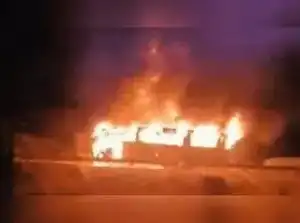
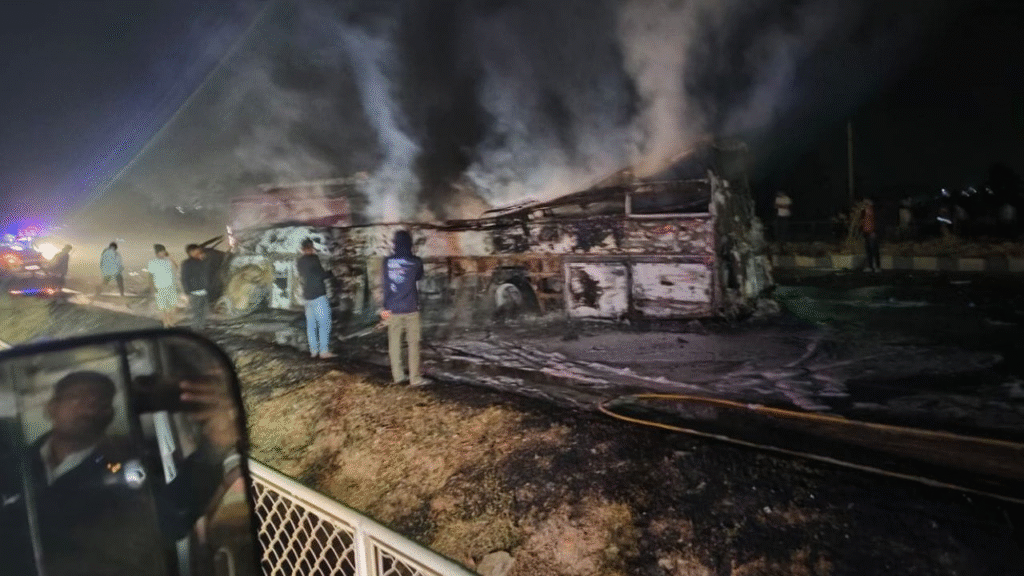
On December 25, 2025, in the early hours of Christmas morning, a private sleeper bus traveling on National Highway-48 (NH-48) in Hiriyur, Chitradurga district, Karnataka, collided head-on with a truck that had veered across the central divider. The impact caused the bus’s fuel tank to rupture, and within minutes the vehicle was engulfed in flames. Dozens of passengers were trapped inside; scores were injured, and several lives were lost in what officials describe as a horrific fire. Beyond the heartbreak, this disaster — like many before it — exposes deep, structural problems in India’s public safety and regulatory frameworks.While official figures vary slightly as investigations continue, it is clear that this accident resulted in multiple deaths and serious injuries, prompting condolences from Prime Minister Narendra Modi and Karnataka’s Chief Minister, as well as ex-gratia payments announced for victims’ families. They are concerned but may be the deterioration is so deep they are unable to fix it. The spontaneous expression of concern and the correction are for the public consumption otherwise there has been no effort from anyone including the people to ensure the elimination of the cause of such fire. Gullible people are made to believe that accidents happen. But repeated accidents are made to happen by negligence and corruption. We all are the indirect cause for these incidents even if directly not connected to such incidents because of our silence on the subject. There is an urgent need to FIX ACCOUNTABILITY
Recurring Tragedies: Not an Isolated Incident
Bus fires and deadly collisions are far from rare in India. Every few months, devastating accidents involving intercity buses grab headlines — from fires caused by electrical faults and overloaded cargo to collisions with heavy vehicles on highways. These recurring tragedies of burning people alive underscore persistent gaps in road safety enforcement, vehicle regulation, and emergency preparedness. They remain in the minds of the public for few days then vanish waiting for the new one. Below is the Table of last five years Bus fire accidents resulting in multiple deaths in Karnataka alone
| Year | Date | Location | Operator | Cause (Reported / Suspected) | Deaths | Injuries | Remarks |
| 2025 | Dec 25 | Chitradurga (NH-48) | Private sleeper bus | Collision → fuel ignition | Multiple | Several | Most severe Karnataka incident |
| 2025 | Sept 16 | Bengaluru | BMTC | Engine compartment fire | 0 | 0 | All passengers rescued |
| 2023 | — | Karnataka (various) | Private buses | Mechanical faults | 0 | Few | Minor but recurring incidents |
| 2022 | — | Karnataka (various) | Public & private | Electrical short circuits | 0 | Few | Often unreported nationally |
| 2021 | — | Karnataka (various) | Public & private | Maintenance failure | 0 | Few | Included in cumulative tot |
Survivors of past bus fires have reported poor emergency exits, lack of fire extinguishers, and illegal modifications to vehicles, which turn these buses into death traps during accidents. The informal reports suggest that many buses operate without adequate safety clearances, often bypassing inspections through informal payments or lax monitoring. The above table obtained online if true indicates the dishonesty of those who do the investigation. The cause of the fire is mentioned as fuel ignition and maintenance and electrical short circuit but no where it is given as carrying inflammable material on board. The Fire in this bus was so much spontaneous that passengers could not escape in time to save themselves. That means that the someone/something helped the fire to spread faster than the escaping passengers. And this can happen only when there are inflammable materials on board the bus. Fire spread was extremely rapid, suggesting the presence of flammable materials, possible fuel tank rupture and highly combustible interior furnishings. The bus appears to have reached flashover within minutes, leaving no survivable conditions inside. This is not normal behaviour for a compliant passenger vehicle. Based on survivor and witness reports, it is seen that the passengers could not escape quickly, fire blocked exits rapidly, and sleeping passengers had no early warning. All this was because of the insufficient emergency exits, poor exit signage or access and no fire alarm or smoke warning system. It is also seen that there was fire Safety Equipment Deficiency with respect of functional fire extinguishers, Fire suppression systems and trained staff response. Even if extinguishers existed, fire size exceeded manual control capacity. There is one more important aspects to these fires which is illegal or Unsafe Modifications (High Probability), Common sleeper bus risks (frequently reported nationwide), Combustible padding, curtains, foam mattresses and Non-fire-retardant materials which dramatically increase fire intensity and toxic smoke. The carriage of the inflammable materials like, LPG, CNG, Oxygen, Diesel or petrol are carried as luggage underneath.
Regulatory Failures: The Weak Link in Safety- Ineffective Safety Enforcement
India’s road transport regulations mandate periodic fitness tests, fire safety equipment, and clear safety exits in passenger vehicles. However:
- Fitness inspections are routinely passed with minimal scrutiny.
- Essential fire suppression equipment and emergency signage are often absent or outdated.
- Many operators overload buses with cargo or flammable materials in contravention of safety norms.
When inspections become rubber-stamp exercises rather than meaningful checks, the door opens for unsafe vehicles to remain on the road. The main cause of regulatory failure in India is the lack of accountability which encourages higher corruption in approvals and monitoring.
One of the most damaging systemic problems is the collusion between regulatory bodies and private operators, where:
- Officials may overlook violations in return for bribes or other perks.
- Rigorous enforcement is compromised by informal payments and influence networks.
- Safety non-compliance becomes normalized, as penalties are rare and weak.
Public discussions and eyewitness accounts reveal how fire safety clearances, vehicle fitness certificates, and road permits are sometimes secured only after informal “under-the-table” payments — a practice that undermines the rule of law and puts lives at risk.
Anti-Corruption Mechanisms: Why They Fall Short
India has institutions like the Lokpal, Lok Ayukta designed to curb graft have failed to do so. Yet:
- Prosecutions for regulatory corruption are exceedingly rare.
- Investigations into safety lapses often stop short of holding individuals accountable.
- Systemic reforms are slow, and impunity is widespread.
Without real deterrents, and with weak follow-through on policy violations, corrupt practices continue to flourish, weakening enforcement at every level.
Accountability Void: Lack of Punishment for Violations
In the Chitradurga case and similar tragedies:
- Investigations are launched, but they don’t lead to any stringent action against negligent parties nor any preventive measures put in place.
- Bus operators may face compensation claims but not criminal charges for negligence and endangerment.
- Regulatory officials — if implicated — rarely face prosecution with lasting consequences.
This accountability gap only encourages lax compliance and perpetuates a cycle where economic priorities outweigh safety imperatives.
What Must Change
To break this tragic pattern, India needs:
- India should seriously think of placing accountability in governance from the First citizen to the last like the block chain principle. No one should be above law.
- Transparent and stringent fitness inspections free from bribery and influence.
- Independent monitoring of transport compliance, with harsher penalties for violations.
- Strong anti-corruption enforcement that prosecutes colluding officials and operators alike.
- Investments in emergency response infrastructure along highways for faster rescue operations.
- Avoid travelling on these buses more so at night on sleeper coaches.
Only by addressing these root causes — corruption, lax enforcement, and systemic inertia — can India hope to prevent tragedies like the Chitradurga bus fire from recurring.
Conclusion
The Chitradurga bus fire accident represents a predictable and preventable safety failure, not a random or unavoidable incident. Based on available media evidence, the severity of fatalities resulted not merely from the collision, but from rapid fire propagation, inadequate fire resistance, lack of escape time, and systemic regulatory lapses.The bus fire tragedy in Chitradurga is not merely an accident; it is a reflection of systemic weaknesses in public safety enforcement and regulatory oversight, exacerbated by corruption and inadequate accountability. Until the regulatory environment is strengthened and corrupt practices are decisively uprooted, such tragedies will continue to endanger the lives of ordinary citizens. Without the accountability of the public office there can be no change in the situation of these incidents. India needs a strong anti-corruption law including the first citizen to the last citizen, until then these accidents will keep happening again and again.
Vidyadhar Durgekar, is an Advocate, An Auditor and Assessor in Sustainability, Safety, Health and Environment, A Author and Poet with published novels and Poetry collection and articles. An Ex Dy Commandant of Indian Coast Guard is also Gen Secretary of Federation of Karnataka Apartment Owners Coop Societies



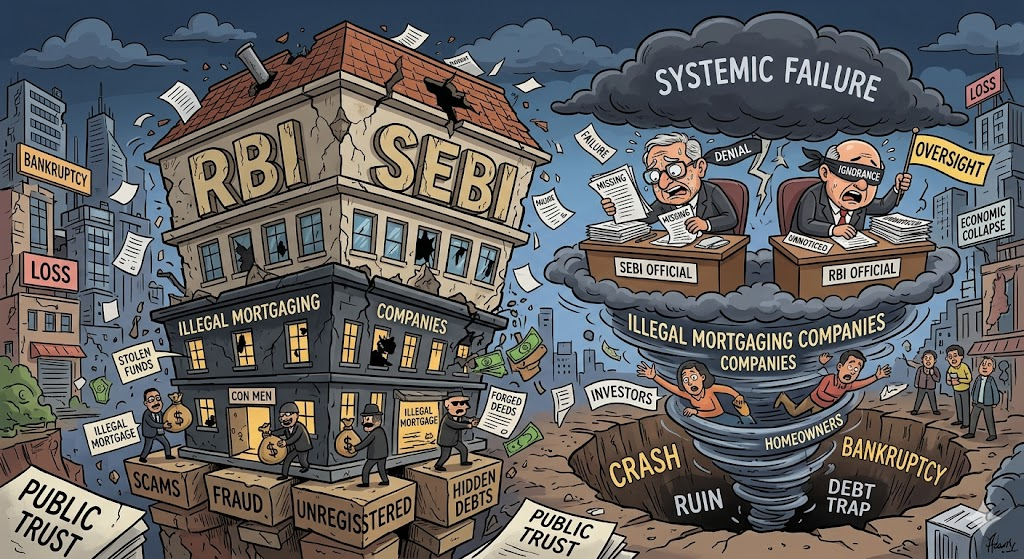
This is a well-documented collapse of regulatory institutions in India, many of which have come to be perceived as money-generating postings rather than guardians of the public interest, owing to deep-rooted and systemic corruption. The failure is most visible in the functioning of regulators responsible for public safety in passenger buses—namely State Transport Authorities, Regional Transport Offices, and Motor Vehicles Departments—whose statutory duty is to ensure roadworthiness, driver competence, and passenger safety. Despite this mandate, unsafe and unfit buses routinely operate on public roads, violations are selectively enforced, and non-compliance is often regularised through informal arrangements instead of corrective action.
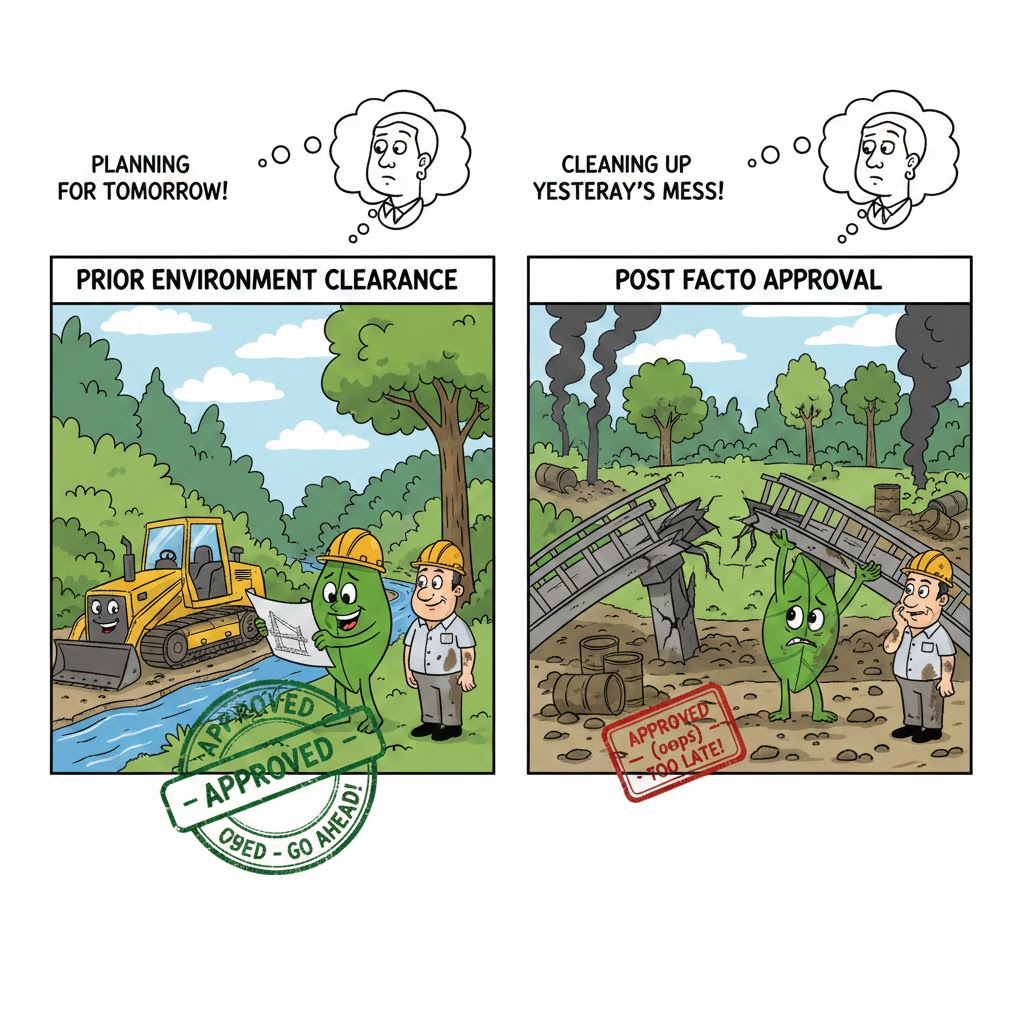
A similar malaise affects sectoral regulators such as RERA, the DGCA, and State Pollution Control Boards. In the case of RERA, instead of actively regulating the real estate market through timely directions and preventive orders that would deter violations and prevent the evasion of law, the regulator appears content to function primarily as a post-facto adjudicatory body. This shift from prevention to cure raises serious concerns: when violations are allowed to mature into disputes, the regulatory process itself becomes vulnerable to benefit-seeking, as defaulters stand to negotiate outcomes rather than face immediate regulatory restraint. It is difficult to justify why a regulator vested with wide preventive powers chooses to reduce itself to a mere adjudicator, unless regulatory inaction serves interests other than those of consumers.
Corruption lies at the heart of these systemic regulatory failures, enabling powerful entities to evade compliance while ordinary citizens bear the consequences—whether in the form of unsafe public transport, stalled housing projects, or environmental degradation. The time has therefore come to regulate the regulators themselves through rigorous parliamentary oversight, transparent performance audits, and enforceable accountability mechanisms. Without meaningful scrutiny and consequences for regulatory abdication, institutional decay will persist and the very purpose of public regulation will stand defeated.
One of the gross violation i see on roads is the concrete mixers being towed by trucks in the city limits. These should be treated as trailers and should carry a vehicle registration like any other trailer.
The authorities have turned a blind eye towards this. This is for sure a disaster waiting to happen.
Thanks Vidhyadhar for highlighting the systemic failures of our Governance. I believe as long as we compromise the inputs the outputs are bound to be predictable. It starts with recruitment of people in accountable and responsible positions. We have mastered to work for our superiors and influencers rarther than follow the book. Bureaucracy has failed the people to whom they are accountable. They only heed to the politicians. The politician is only there to make good of his investment in the polls and to the people who work for him. We are slowly slipping into anarchy if we don’t take the bull by its horns.