




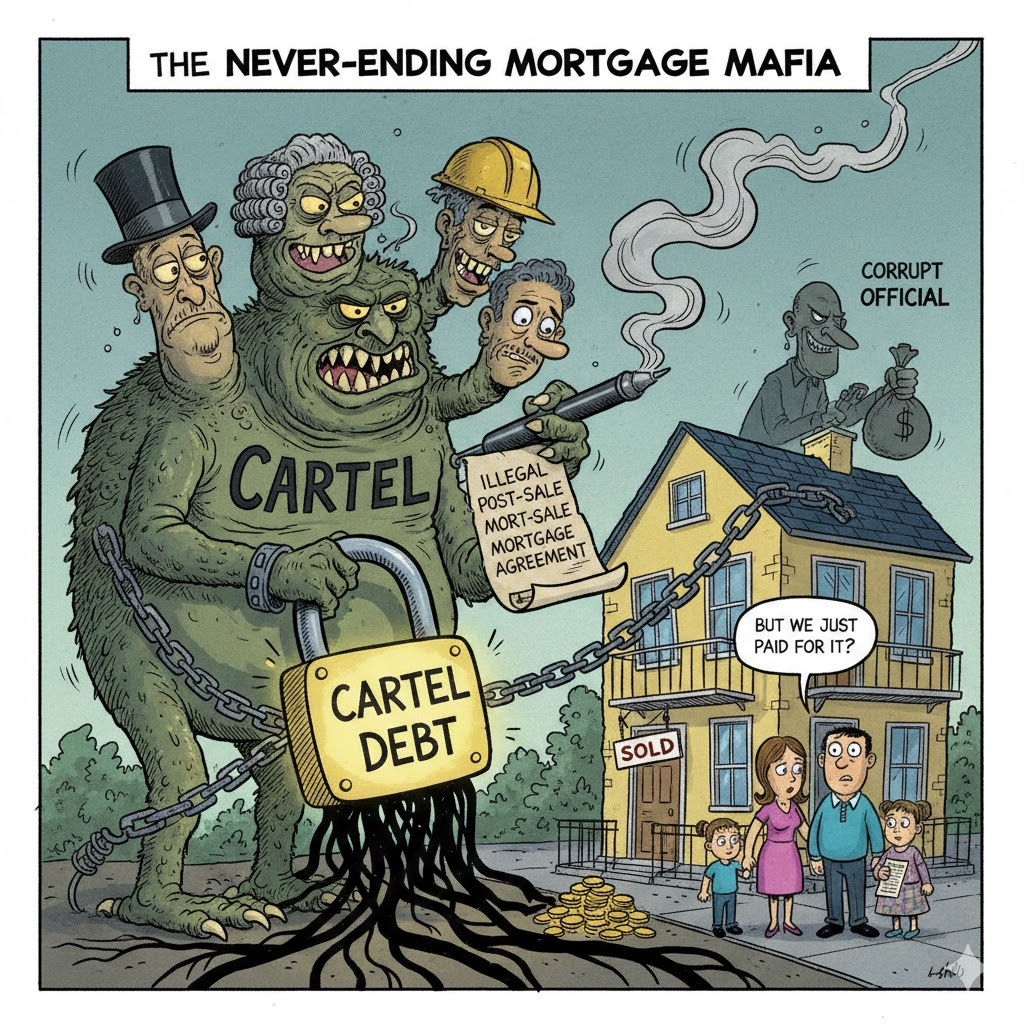
The Taste of Illegally Mortgaged Money: Power, Authority, and the Ruin of Urban Living

In today’s urban India, the apartment has ceased to be merely a home. It has become a financial instrument, a political resource, and in many cases, a silent victim of illegal mortgaging, defective associations, and deep-rooted corruption. Thousands of crores are raised by mortgaging apartment complexes after sale—often without the knowledge or consent of the rightful owners—leaving behind a trail of disputes, litigation, and shattered trust.
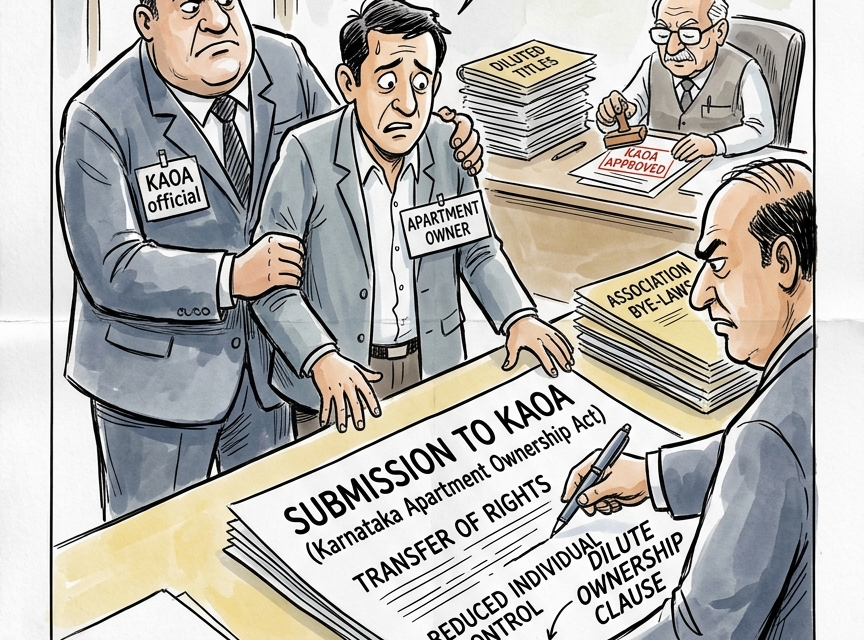
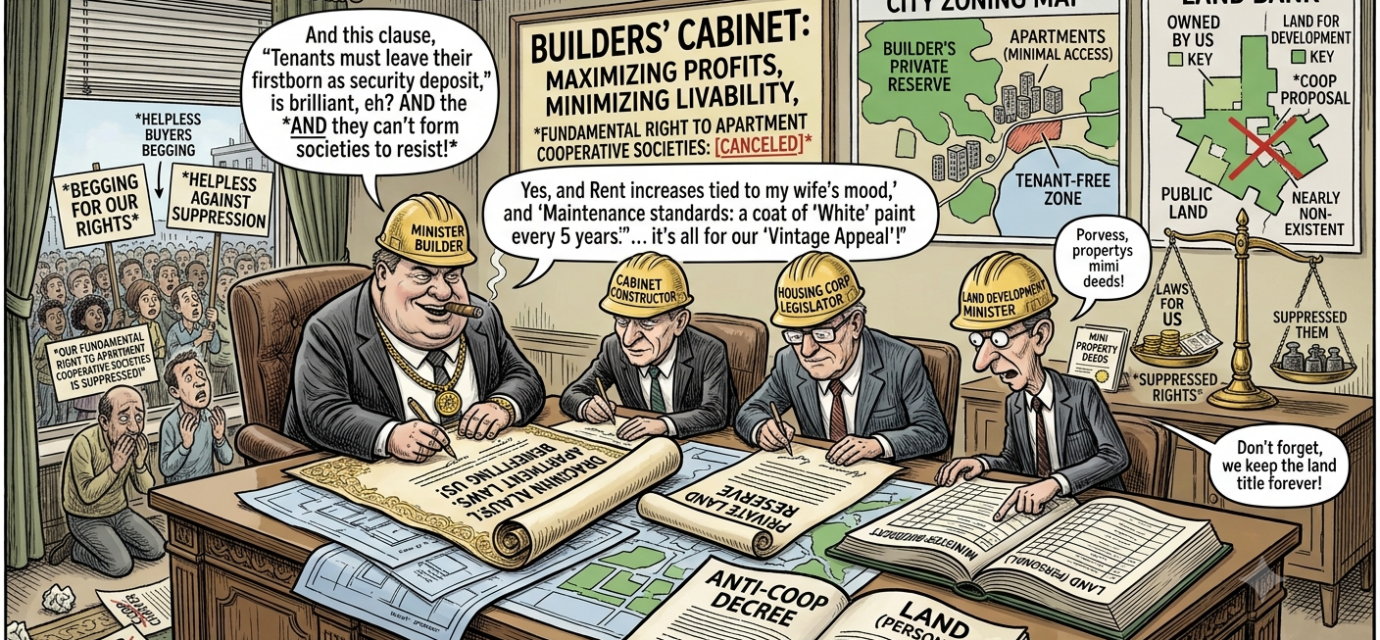
Illegal mortgaging of apartment properties usually begins with a breakdown of governance. Builders, developers, or unauthorised associations continue to exercise control even after the apartments are sold. Instead of transferring power to a legally constituted, transparent, and accountable association of apartment owners, they create defective or proxy bodies. These entities exist not to serve residents, but to sign documents, raise loans, and legitimise transactions that are otherwise unlawful.
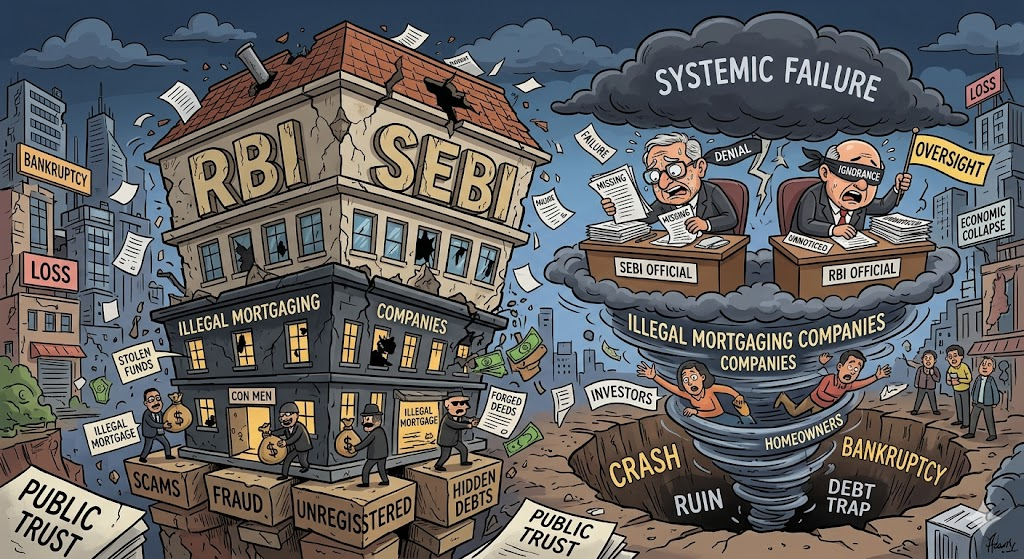
The money raised through such illegal mortgages is enormous—running into thousands of crores across cities. Once apartments are sold, common areas and land cease to be the developer’s asset. Yet, by exploiting weak enforcement, delayed registrations, and compromised officials, these properties are mortgaged as if ownership never changed. Banks, financial institutions, and authorities often turn a blind eye, either due to negligence or inducement.
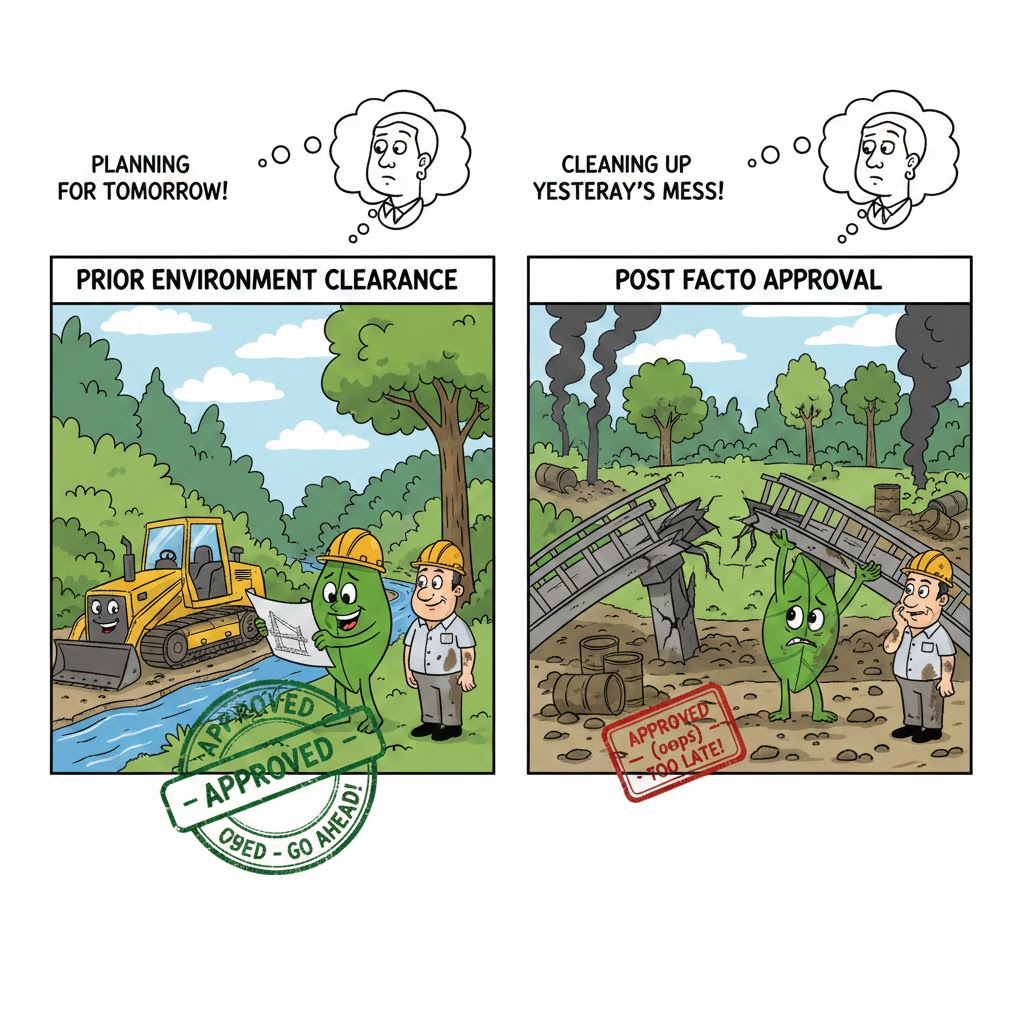
This is where bribe and corruption enter decisively. Files move faster when money speaks. Objections disappear when influence intervenes. Statutory violations are regularised retrospectively, and illegal acts acquire an artificial cloak of legality. When money becomes power and money becomes authority, the rule of law is reduced to a formality, and justice becomes negotiable.
The taste of this illegally raised money is addictive. It fuels elections, sustains political patronage, and strengthens informal networks of power. Funds generated from illegal mortgaging do not remain confined to real estate—they travel into campaigns, influence policy decisions, and silence opposition. In such a system, disputes are not accidents; they are inevitable outcomes. Apartment owners find themselves trapped between banks claiming security interest, developers denying responsibility, and authorities refusing accountability.
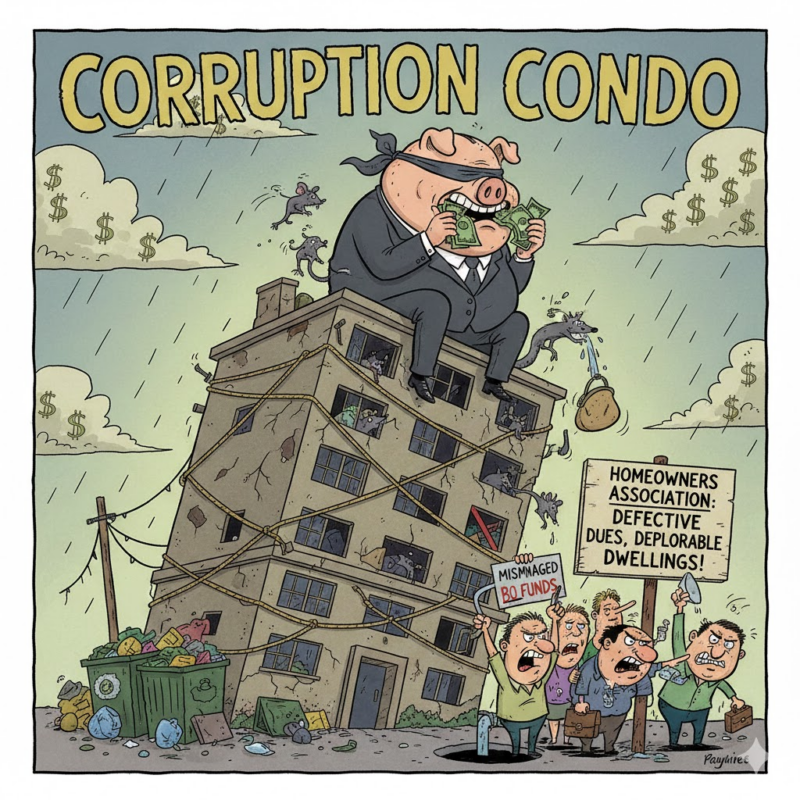
The worst casualty of this process is the ordinary citizen. Homebuyers who invested their life savings suddenly face attachment notices, denial of services, or threats of auction. Years are lost in courts and tribunals, while the beneficiaries of illegal mortgaging enjoy immunity and delay. Defective associations, lacking legal standing and democratic legitimacy, become instruments of exploitation rather than representation.
If money alone defines power and authority, governance loses its moral foundation. Law becomes selective, institutions weaken, and corruption becomes systemic rather than incidental. Illegal mortgaging is not merely a financial crime; it is an assault on property rights, democratic participation, and urban sustainability.
True reform must begin by restoring legality in apartment governance—mandatory formation of lawful associations, strict prohibition on post-sale mortgaging, personal liability for officials enabling illegal acts, and transparent scrutiny of large financial transactions. Without this, cities will continue to grow vertically while justice sinks deeper underground.
The real question is not whether illegally mortgaged money tastes sweet to those who consume it—it certainly does. The question is how bitter it becomes for society when money replaces law, authority replaces accountability, and homes become collateral for corruption.
Number of views: 1,137